
Sleep apnea and your heart: what CPAP can help, and what it cannot promise
About this article: AI-assisted, not independently clinically reviewed
Prepared with AI-assisted research using the sources below. Not independently reviewed by a clinician. Guidance and individual circumstances can change; use this article to prepare for a clinical conversation, not to choose treatment.
Sources checked 2026-09-05. Last updated 2026-09-05.
The short version
- Snoring, witnessed pauses and daytime sleepiness can justify a sleep assessment.
- CPAP has meaningful symptom benefits for appropriate patients.
- Randomised trials have not established cardiovascular event prevention for every person with sleep apnea.
Sleep apnea is more than loud snoring. It can disrupt sleep and make daily life difficult, while also appearing alongside important cardiovascular conditions. The evidence supports taking it seriously, but not selling treatment as a guaranteed way to prevent a heart attack.
What obstructive sleep apnea does
In obstructive sleep apnea, the upper airway repeatedly narrows or closes during sleep. Interrupted breathing, oxygen changes and disrupted sleep place stress on the body. The AHA describes strong associations with hypertension and several cardiovascular conditions, and recommends screening in selected settings such as resistant or poorly controlled hypertension and recurrent AF after treatment.
Evidence: Yeghiazarians et al., AHA 2021: obstructive sleep apnea and cardiovascular disease
An association is not proof that treating one condition prevents every outcome associated with it. Obstructive and central sleep apnea are also different conditions. The type and severity matter when planning care, particularly for someone who already has heart or lung disease.
Evidence: Yeghiazarians et al., AHA 2021: obstructive sleep apnea and cardiovascular disease · NHLBI 2025: sleep apnea diagnosis
Clues to discuss
- A partner notices repeated breathing pauses, gasping or loud snoring.
- You feel unusually sleepy or fatigued during the day, even after enough time in bed.
- Morning headaches, insomnia or repeatedly disrupted sleep are affecting daily life.
- Someone else notices the nighttime symptoms even though you do not remember them.
Evidence: NHLBI 2025: sleep apnea symptoms
A clinical assessment and sleep study help establish the diagnosis. A sleep diary can add context about timing and symptoms. Snoring alone, or a watch's overnight oxygen estimate, cannot establish or reliably rule out sleep apnea. If sleepiness makes driving unsafe, do not drive while waiting for an appointment.
Evidence: NHLBI 2025: sleep apnea diagnosis · NHLBI 2025: sleep apnea symptoms
What CPAP can offer
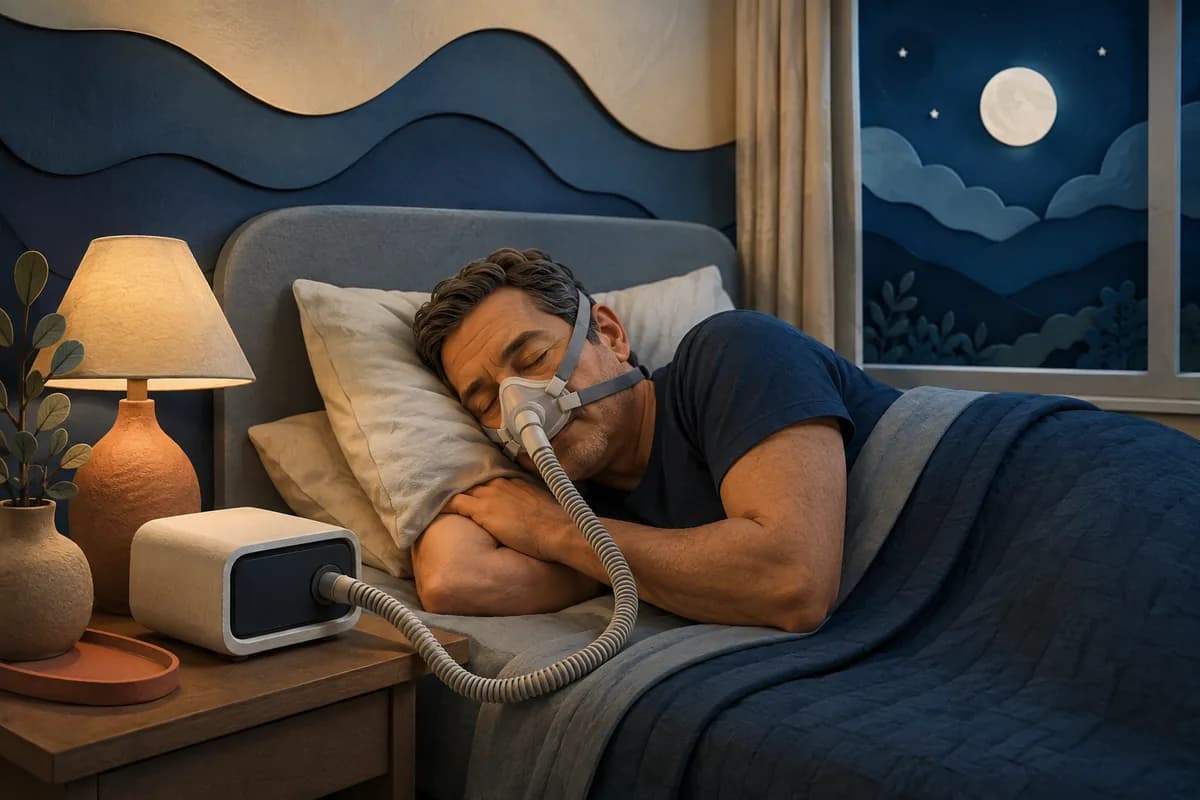
Positive airway pressure keeps the airway open during sleep. The AASM strongly recommends PAP for adults with diagnosed OSA and excessive sleepiness, and conditionally recommends it for impaired sleep-related quality of life or coexisting hypertension. These are worthwhile treatment goals even when someone never sees a dramatic change in a heart-risk score.
Evidence: Patil et al., AASM 2019: positive airway pressure guideline
Read cardiovascular claims carefully
The SAVE trial enrolled 2,717 adults with moderate or severe OSA and established coronary or cerebrovascular disease. Most were men with little daytime sleepiness. Over an average 3.7 years, CPAP did not significantly reduce the main cardiovascular event outcome. Average use was 3.3 hours per night. Snoring, sleepiness, quality of life and mood improved.
A 2023 individual-participant meta-analysis of three trials likewise found no overall cardiovascular event reduction from random assignment to CPAP. An adjusted analysis associated use of at least four hours per day with lower recurrence. However, adherence was not randomised: people who consistently use treatment may differ in other important ways. This is not proof that four hours guarantees protection, nor an instruction to remove the mask after four hours.
Evidence: Sánchez-de-la-Torre et al., JAMA 2023: CPAP adherence meta-analysis
These findings do not show that CPAP is useless or that it causes cardiovascular harm. They limit what can honestly be promised about event prevention in the studied populations. Your reason for treatment may be sleepiness, sleep quality, blood pressure or several factors together, rather than one headline outcome.
Evidence: McEvoy et al., NEJM 2016: SAVE randomised trial · Sánchez-de-la-Torre et al., JAMA 2023: CPAP adherence meta-analysis
Make treatment easier to live with
- Tell the sleep team about mask leaks, dryness, pressure discomfort or difficulty sleeping with the equipment.
- Ask how follow-up will assess both symptoms and device use, not simply whether a machine was supplied.
- Keep a short record of sleep quality and the specific problem preventing use, so troubleshooting is practical.
- Use the prescribed treatment through sleep as advised. Do not change pressure settings yourself or abandon treatment without discussing alternatives.
Evidence: Patil et al., AASM 2019: positive airway pressure guideline
Continue established cardiovascular care, including the plan for blood pressure, cholesterol and other conditions. Better sleep and sensible prevention can work together without claiming that one machine replaces the rest of your care.
This article is educational and is not medical advice, a diagnosis, or a treatment recommendation. CardioTrack is not intended for diagnosis or treatment. Always discuss your own results with a qualified clinician.
Sources and further reading
- Yeghiazarians et al., AHA 2021: obstructive sleep apnea and cardiovascular disease
- NHLBI 2025: sleep apnea symptoms
- NHLBI 2025: sleep apnea diagnosis
- Patil et al., AASM 2019: positive airway pressure guideline
- McEvoy et al., NEJM 2016: SAVE randomised trial
- Sánchez-de-la-Torre et al., JAMA 2023: CPAP adherence meta-analysis